Fin Science: Split vs Blade vs Force Fins Explained
I took three different fin types on a dive trip to Cozumel and rotated through them over 40 dives. I logged my air consumption, tracked my swim speed over a marked 50-meter transect, and noted how my legs felt after each dive.
My dive buddy thought I was conducting a lab experiment. I was. That's how I process gear decisions. The chemistry background never turns off.
Here's what the physics says — and what my data showed.
How Fins Generate Thrust
Two mechanisms. Both matter.
Drag-based thrust: The fin acts like a paddle, pushing water backward. Newton's third law pushes you forward. Larger surface area and faster kicks mean more thrust. This is the primary mechanism for blade fins.
Lift-based thrust: The fin acts like a wing, deflecting water at an angle to generate a forward-directed force. Think airplane wing, not canoe paddle. This is the primary mechanism for split fins and Force Fins.
Every fin uses both mechanisms. The ratio depends on design, stiffness, and your kicking technique.
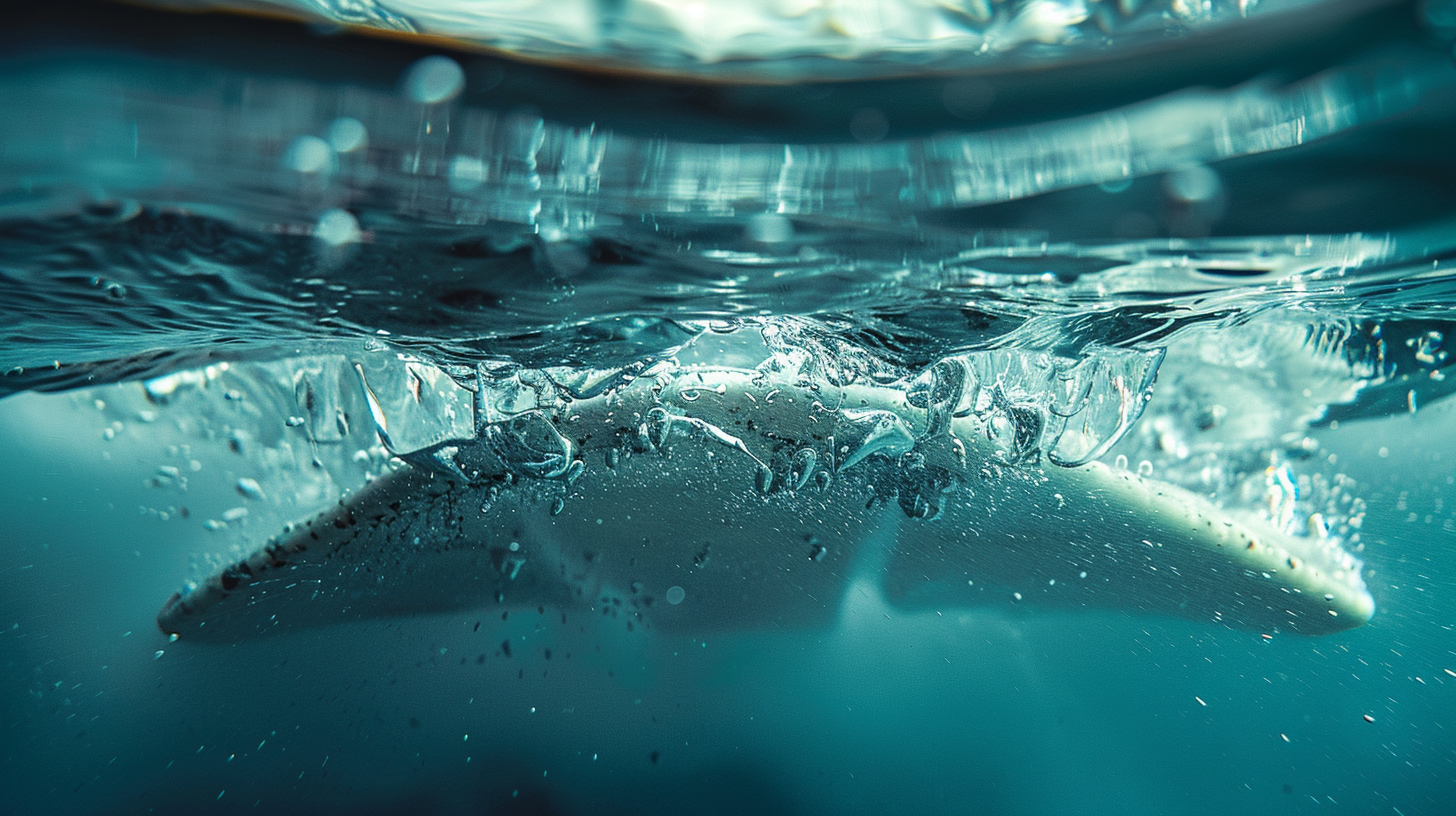
Blade Fins (Paddle Fins)
How they work: A flat or slightly curved panel of material. You kick. The blade pushes water. You move. Simple as that.
The physics: Thrust is proportional to the square of blade velocity through the water. What this means practically: doubling your kick speed quadruples the thrust. That's why powerful kicks with blade fins move you fast. It's also why they're tiring — you're fighting that squared relationship on every stroke.
Stiffness is the variable. A floppy blade wastes energy because it bends and spills water off the sides instead of pushing it backward. A stiff blade transfers more energy into thrust. But a too-stiff blade requires so much leg power that muscles fatigue quickly and air consumption spikes.
The sweet spot for most recreational divers is medium stiffness. The Mares Avanti Quattro is moderate and versatile. The ScubaPro Jet Fin is stiff and powerful — the technical diver's standard for decades. The Hollis F1 sits between them.
Where blade fins excel:
- Flutter kick: Standard alternating up-down. Effective for distance.
- Frog kick: Legs splay outward and sweep together. Blade fins excel here because the large, stiff surface generates significant thrust per cycle. This is the preferred kick for technical divers because it doesn't disturb sediment below you.
- Helicopter turn: Extend one fin, sweep to pivot. Blade fins give excellent control.
- Back kick: Reverse the frog kick to move backward. Requires stiff fins and practice. Invaluable for cave and wreck diving.
- Maximum thrust per kick cycle — nothing else comes close
- Higher energy expenditure per kick
- Can cause leg fatigue on long dives
- Heavier and bulkier to travel with
Split Fins
How they work: A longitudinal slit divides the blade into two independent panels. When you kick, the halves separate and twist, creating a propeller-like motion that generates lift-based thrust on top of drag-based thrust. Each half acts like a small wing.
The physics: The split design lets each half adopt an angle of attack relative to water flow, generating a lift force with a forward component. The key advantage: lift-based thrust is more energy-efficient at lower kick speeds. You get more forward motion per calorie burned.
This isn't just theory. Pendergast et al. (2003) and Zamparo et al. (2006) published peer-reviewed studies confirming that split fins reduce metabolic cost of swimming at moderate speeds compared to equivalent blade fins. In practical terms: split fins are less tiring for the same speed. Or equivalently, they produce the same speed with less effort.
But — and this is the critical "but" — the same studies showed that at high kick speeds and high thrust demands, blade fins outperform splits. The split design hits a thrust ceiling that rigid blades don't.
The Atomic Aquatics Split Fin is the gold standard. The Tusa Hyflex Switch and Oceanic Manta Ray are solid alternatives.

Where split fins excel:
- Flutter kick: This is their sweet spot. The alternating up-down motion is exactly what the design optimizes.
- Lower energy expenditure at cruising speeds
- Reduced leg fatigue on long dives
- Lighter than equivalent blade fins
- Ideal for divers with knee or ankle problems
- Frog kick: Less power and control than blades. The flexible halves don't generate as much thrust in the sweeping motion.
- Back kick and helicopter turn: Very difficult. The flexible, split design provides minimal resistance in reverse, generating almost no backward thrust.
- Less thrust for fighting currents
- Not suitable for technical diving
Force Fins and Unconventional Designs
Force Fins were created by Bob Evans, a marine biologist who studied dolphin and whale fluke biomechanics. Instead of maximizing surface area or splitting the blade, Force Fins use a short, highly flexible blade with a distinctive scooped shape.
How they work: The flexible blade stores energy during the power phase of your kick and releases it as a snap of additional thrust at the end of each stroke. Evans calls it "spring fin" dynamics. It's similar to how a whale's fluke stores and releases elastic energy.
The short blade also means less water resistance during the recovery phase — bringing your leg back to the starting position. Less wasted energy on the return stroke.
Independent testing confirms that Force Fins have surprisingly competitive thrust-to-effort ratios despite their small blade area. They don't generate the peak thrust of a large blade fin, but they maintain efficiency across a wide range of kick speeds.
Force Fin strengths:
- Very low ankle and knee stress — genuinely joint-friendly
- Natural, comfortable kicking motion
- Effective at slow to moderate speeds
- Extremely lightweight and compact for travel
- Some divers report an unusually smooth glide from the vortex generation
- High price ($250-400+)
- Very low maximum thrust — not for strong currents
- Limited availability — most dive shops don't stock them
- Learning curve — requires a different kick cadence
- Unusual appearance. People will comment.
Other Designs Worth Mentioning
Hinged blade fins (like the Mares Volo Power) use a joint where the blade meets the foot pocket, maintaining optimal angle of attack throughout the kick cycle. Smart engineering.
Channel fins (like the Aqua Lung Phazer) have raised rails along the blade edges that prevent lateral water spillage. Concentrates thrust.
Spring straps: Not a fin type, but every diver should replace rubber heel straps with spring straps ($20-30). Makes donning and doffing enormously easier, especially with gloves.
My Recommendations
Choose blade fins if:
- You dive in currents regularly
- You practice or want to learn frog kicks and back kicks
- You're a technical diver or aspire to be one
- You prioritize thrust and control over comfort
- Recommended: Mares Avanti Quattro Plus (all-around), Scubapro Jet Fin (maximum power)
- You do relaxed recreational reef diving
- You have knee or ankle issues
- Air consumption is a priority and you cruise at moderate pace
- You don't need back kicks or precise maneuvers
- Recommended: Atomic Aquatics Split Fin
- Joint comfort is your top priority
- You dive calm conditions without strong currents
- You travel frequently and want the lightest option
- You're willing to pay a premium for biomimetic design
- Recommended: Force Fin Original
Understand the trade-offs. Pick the fin that matches how you dive, not how the internet argues.
More Gear Reviews
Browse all gear reviews on the [OkToDive blog](/blog). Every review is written by a chemist who tests gear, not a marketer who photographs it.
→ [Trip Planner](/trip-planner) — match your gear to the right destination | [Best places to dive](/blog/best-places-to-scuba-dive)
→ [Subscribe to The Depth Report](/#newsletter) — monthly gear reviews, dive site scores, no hype.
I'm Chad. Your chemist who turned a dive trip into a propulsion experiment.