Best Budget Scuba Gear for New Divers in 2026
You just got certified. You're hooked. You're also tired of renting gear that smells like the last 200 people who wore it and fits like it was designed for a different species.
I get it. I was there. I also remember pricing out a full kit for the first time and feeling my stomach drop. A premium regulator alone can cost over $1,000. A top dive computer adds another $1,300. You start thinking maybe you should just keep renting.
Don't. Here's the thing — modern manufacturing has made reliable scuba equipment more affordable than ever. You can build a complete personal kit for under $1,500 that's safe, comfortable, and will last you hundreds of dives. You just have to know where to spend and where to save.
What to Buy First (And Why This Order)
Not everything needs to be purchased at once. Here's the sequence I recommend:
1. Mask, snorkel, boots, and fins — Personal fit items. A bad mask ruins every dive. Period. 2. Dive computer — Safety-critical. Much better than dive tables. Much better than a rental computer you've never used. 3. Wetsuit — Thermal protection tailored to your body. 4. Regulator — Your life-support system. 5. BCD — Can be rented longest without major downsides.
Why this order? A leaking mask is miserable. A dive computer you understand makes you measurably safer. A well-fitting wetsuit keeps you warm and in the water. Rental regulators are typically well-maintained — they have to be, it's a liability issue. BCDs are the most standardized rental gear and can be rented comfortably while you save up.
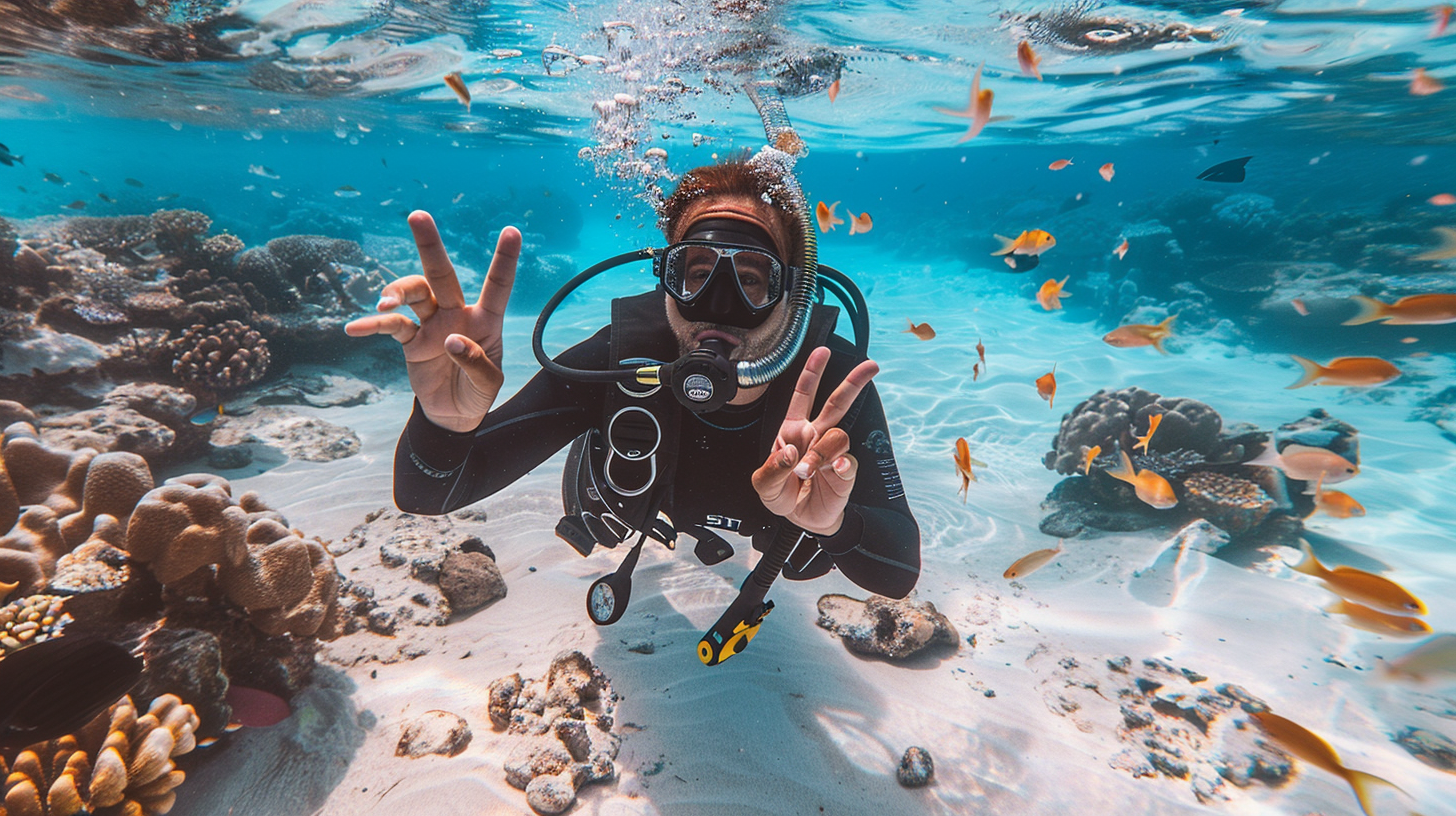
Mask: Cressi Big Eyes Evolution — $55
The most important thing about a mask is fit. The second most important thing about a mask is fit. The third most important thing is clear lenses. Everything else — color, brand, fancy coatings — is marketing.
The Cressi Big Eyes Evolution fits a wide range of face shapes, offers excellent field of view, and costs a fraction of premium masks. The dual-lens design sits close to your face, minimizing internal volume for easier clearing.
How to test fit: Press the mask to your face without the strap. Inhale gently through your nose. It should stick without you holding it. Air leaking around the edges? Try another model. No mask fits every face. Don't force it.
Budget alternative: Tusa M-212 Freedom Ceos (~$45). Another excellent-fitting mask.
Snorkel: Basic J-Valve — border-ocean-300/30 pl-4">5
Do not spend more than $20 on a snorkel. The expensive ones with dry tops and flex tubes and purge valves add complexity you don't need. A simple J-shaped snorkel with a comfortable silicone mouthpiece. Done.
Boots and Fins: Mares Avanti Quattro Plus + Basic 3mm Boots — border-ocean-300/30 pl-4">50
New divers often buy split fins because they're "easier." Split fins are fine for casual reef diving but lack power for currents, surface swims, and any situation where you actually need to move.
The Mares Avanti Quattro Plus is a paddle fin with a proven design. Excellent thrust with reasonable effort. Many dive professionals use these daily. At $100-120, it delivers 90% of the performance of fins costing three times as much.
Pair with basic 3mm neoprene boots ($30-50) with hard soles for boat decks and rocky entries.
Dive Computer: Shearwater Peregrine 2 — $475
This is where I tell you to spend a little more. A dive computer is a safety device. The cheapest computers ($100-150) have dim screens, confusing interfaces, and limited features that can actually make you less safe if you can't read the display at depth.
The Shearwater Peregrine 2 transformed the entry-level market. For $475, you get:
- Full-color LED display readable in any conditions
- Bühlmann ZHL-16C algorithm with adjustable conservatism
- Air integration via optional wireless transmitter
- Rechargeable battery with 30+ hours of dive time
- Bluetooth logging to your phone
- An interface designed by people who actually dive
Budget alternative: Aqualung i330R (~$300). Solid, color display, good readability. Interface isn't as intuitive as the Shearwater.
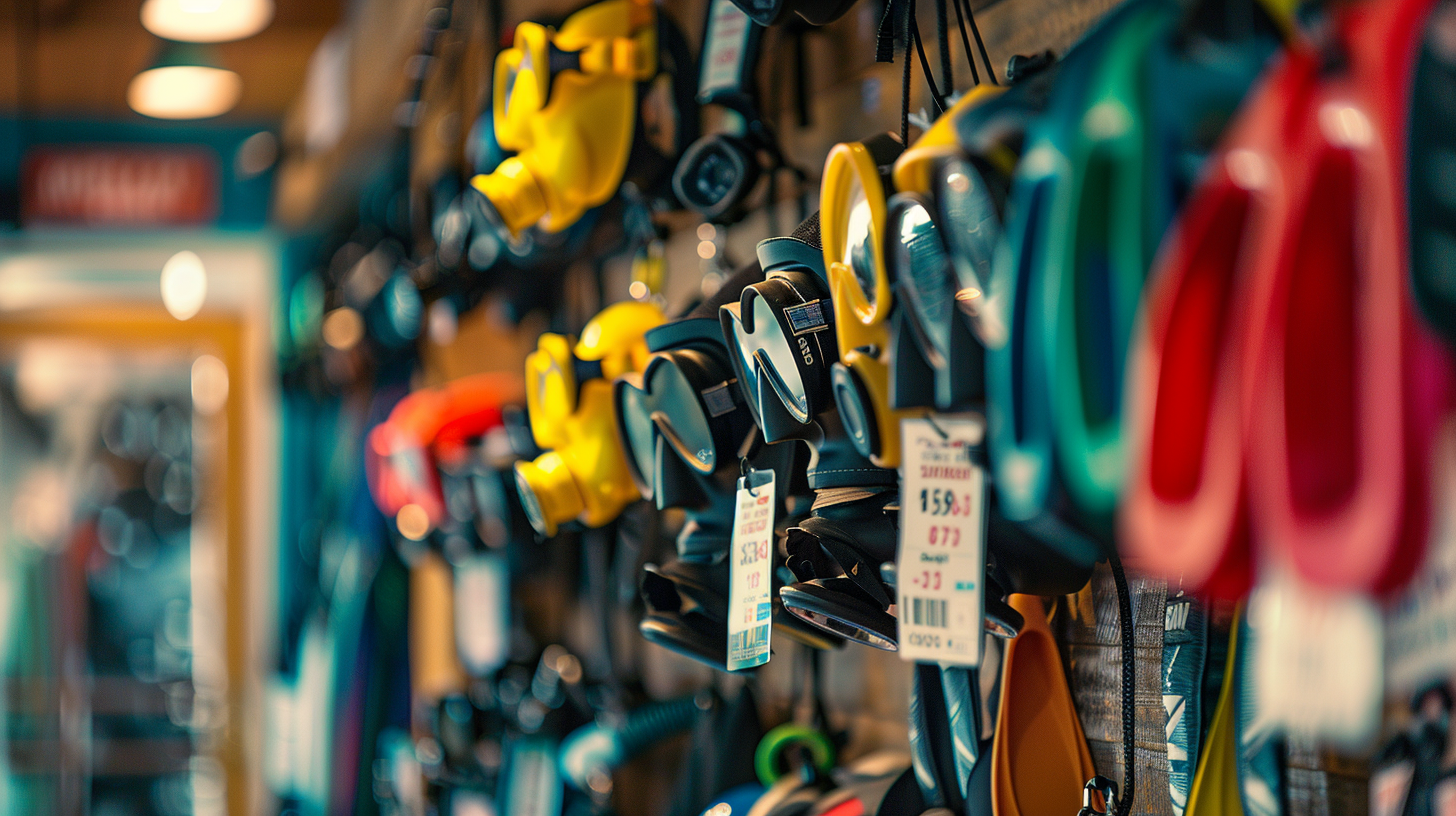
Wetsuit: Aqualung AquaFlex 5mm — $250
For a first wetsuit that covers the widest range of conditions, 5mm is the most versatile thickness. The Aqualung AquaFlex 5mm offers Super-Stretch neoprene that's genuinely more comfortable than standard neoprene, GBS seams for minimal water entry, and a decent fit across body types.
At $250, it's not the cheapest 5mm available. But the stretch neoprene makes a meaningful difference in comfort. And a comfortable diver is a diver who keeps diving.
Warm-water only: Cressi Morea 3mm ($130). Basic but well-made. Sufficient above 24°C.
Cold-water: A 5mm with a hooded vest ($80-100) extends your range significantly until you're ready for a 7mm or drysuit.
Regulator: Apeks XL4+ — $350
Here's where experienced divers argue endlessly. Some say never go cheap on your reg. Others point out that every regulator from a major manufacturer meets safety standards.
The truth is in the middle. Budget regs from reputable manufacturers are safe and reliable for recreational diving. They may have slightly higher breathing resistance at depth compared to $1,200 regulators, but for recreational depths under 40 meters, this difference is imperceptible to most divers.
The Apeks XL4+ is a diaphragm-sealed first stage with a downstream second stage. Built to Apeks quality standards (which are very high). Environmentally sealed for cold-water resistance. Approximately $350. It breathes well, services easily, and lasts years.
Alternative: Aqua Lung Calypso (~$300). Entry-level from a major manufacturer, but "entry-level" from Aqua Lung is still a well-engineered life-support device.
Include an octopus. Both manufacturers offer matching octopus second stages for $80-120. Buy the matched set for easier servicing.
SPG and Compass: Analog Console — $60-80
A simple analog SPG with compass in a console. That's all you need. Aqualung Analog Combo or Cressi Console. $60-80.
If your computer has air integration capability, you can skip this and buy a wireless transmitter instead (~$250-350). But for a budget build, analog console is the move.
The Complete Kit
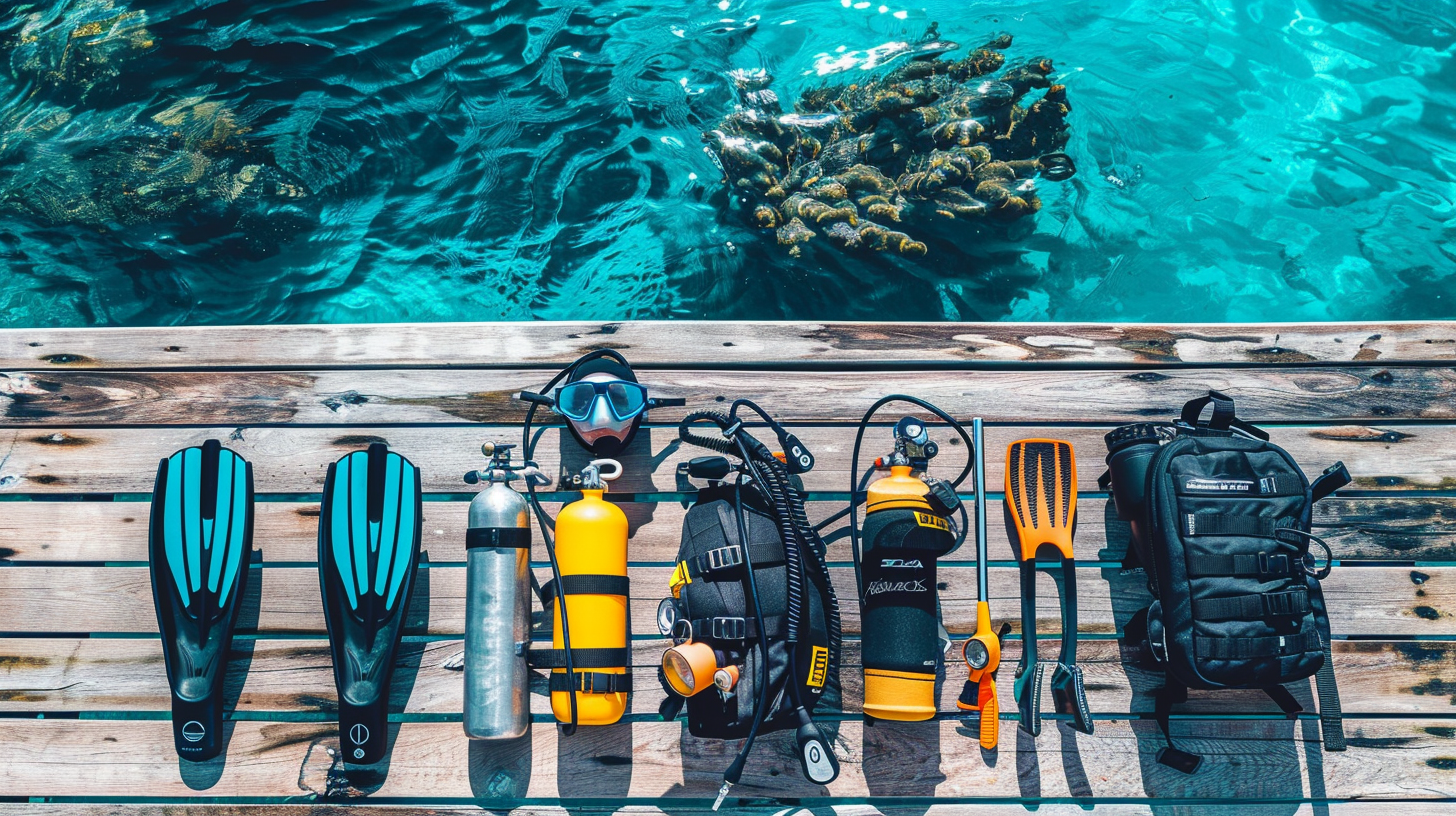
| Item | Recommended | Price | |---|---|---| | Mask | Cressi Big Eyes Evolution | $55 | | Snorkel | Basic J-valve | $15 | | Fins | Mares Avanti Quattro Plus | $110 | | Boots | 3mm hard-sole | $40 | | Computer | Shearwater Peregrine 2 | $475 | | Wetsuit | Aqualung AquaFlex 5mm | $250 | | Regulator | Apeks XL4+ | $350 | | Octopus | Apeks XL4+ Octo | $100 | | SPG Console | Analog combo | $70 | | Total | | $1,465 |
Under $1,500. Gear from reputable manufacturers that will last hundreds of dives.
Where NOT to Cut Corners
- Never buy a no-name regulator to save $50. Your reg is life support. Buy from Apeks, Aqua Lung, Scubapro, Cressi, or Atomic. No exceptions.
- Never buy a mask without testing fit. A leaking mask is miserable.
- Never skip the dive computer. It's the most impactful safety upgrade you can make.
- Get your regulator serviced annually. Budget regulators perform great when maintained. Neglected premium regulators fail.
Where You CAN Save
- Buy previous-year models. Scuba gear doesn't change dramatically year to year. A 2025 model at 30% off is a great deal.
- Watch for sales. Black Friday, end-of-season, and dive show specials routinely knock 20-40% off retail.
- Buy a used BCD. BCDs are simple mechanical devices. A well-maintained used BCD from a reputable brand is a smart purchase. Just inspect for bladder leaks and a functioning inflator.
- Skip the scuba bag. A large duffel works fine.
More Gear Reviews
Browse all gear reviews on the [OkToDive blog](/blog). Every review is written by a chemist who tests gear, not a marketer who photographs it.
→ [Trip Planner](/trip-planner) — match your gear to the right destination | [Best places to dive](/blog/best-places-to-scuba-dive)
→ [Subscribe to The Depth Report](/#newsletter) — monthly gear reviews, dive site scores, no hype.
I'm Chad. Your chemist who believes in spending smart, not spending big.